cleaning and smoothing 3d printer draw sliders
The process you lot use to put together your 3D model determines a lot - how easy it is to edit later, how good it looks when lighting and shaders are practical, how piece of cake it is to deform while animating, and much more. A good model is crucial for all of the other parts of the CG pipeline to work well.
Messy topology, on the other mitt, tin can make the remainder of the process a disaster.
What can you do to go on that from happening? Hither are 8 tips you lot can use right away.
Contents of this commodity:
- 1. Understand Mutual Mesh Tools
- 2. Know When to use N-gons, Triangles, and Quads
- three. Understand Edge Menstruum
- 4. Utilise MatCaps "
- 5. When to utilize Creases versus Belongings Edges "
- 6. Continue It Unproblematic, Stupid (KISS)
- 7. Beware of Duplicates
- 8. Ever Check Your Normals
eight Tips For Nifty Blender Topology
i. Understand Common Mesh Tools
This is an obvious tip, merely one that anybody venturing into 3d modeling in Blender needs to become proficient in.
When modeling, agreement how to properly add/remove/modify the mesh s the virtually important aspect. After all, 3d modeling is all nigh befitting faces/edges/vertices to form a visually pleasing shape.
So permit's take a look at some of the about mutual types of tools you'll use when modeling. (Note that most of these tools can but be accessed when in edit style in Blender .)
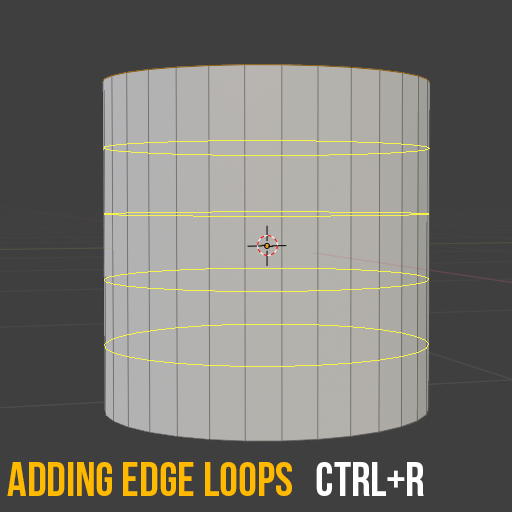
Adding Edge Loops
Adding edge loops is something you lot'd typically do to back up the edges of a mesh to create a crisp-looking edge, or merely to provide boosted geometry very chop-chop.
The shortcut for this is Ctrl + R.
When this is enabled, you demand to hover over the mesh itself which will and then reveal a xanthous line to project where this edge loop will be placed. To increase the number of border loops, use your mouse scroll wheel or blazon in the number of loops you lot want using the numeric keypad.
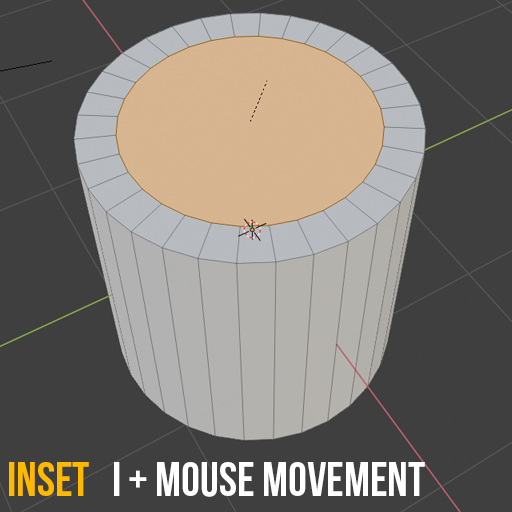
Inset
Inset allows you to create things similar a window. If I click a face and printing I (every bit in Inset)with a face up selected, I can then move my mouse to create a smaller version of that confront within. This is incredibly useful for creating something like a frame or an edge around a specific part of the mesh. Note that this creates the confront on the same surface every bit the face selected and does not alter it's shape.
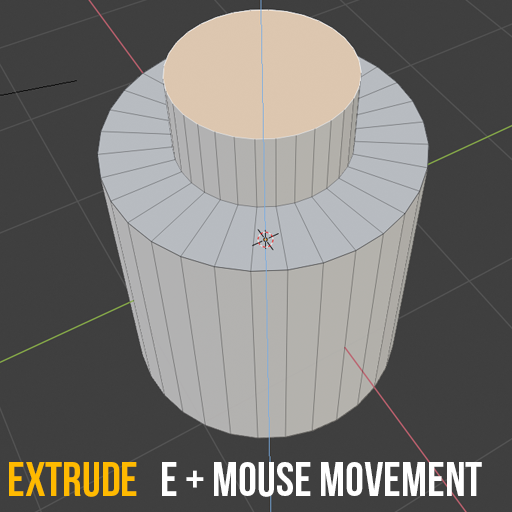
Extrude
Similar to Inset, Extrude besides creates additional geometry simply different Inset, it allows you to change the shape of it past allowing you to have that extra geometry and move it around.
To extrude a face printing E (equally in Extrude) then move your mouse in the direction you desire to extrude to. Typically, this will default to the axis this face is pointing in, but you may also encounter that y'all tin motion the extrusion in any direction you lot want. Left click over again in order to terminate moving.
Along with the basic extrude you also accept a number of different wants to extrude. To admission more extruding options press the shortcut keys Alt + East which will open the extrude card. If yous accept vertex selection mode enabled yous'll see all the options available to you to extrude.
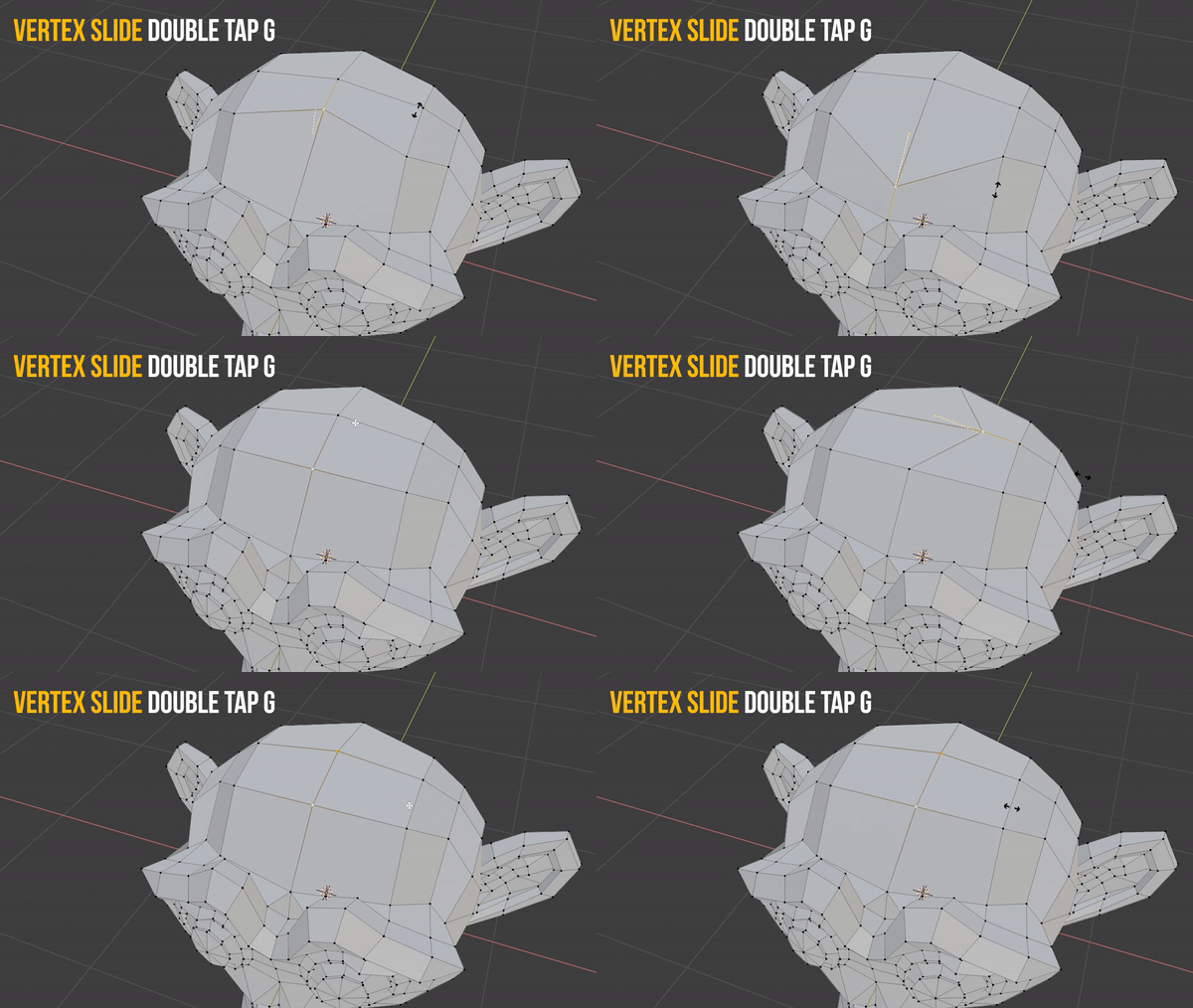
Vertex/Edge Slide
Often times yous'll need to realign vertices to conform to a proper shape and while you lot can endeavour to push and pull verts this can lead to a frustrating procedure of trying to get vertices in line properly. Vertex Slideallows you to movement vertices in line with the edge(south) they are connected to. Remember of it as being connected to a runway and the rail is an border. In order to enable this yous can press G twicewith a vertex selected. If you accidentally slide a vertex, you tin correct click to cancel the motion.
The same tin can exist done with edges to speed upward the process. If you need to slide an edge into identify while keeping it along the aforementioned surface employ the same shortcut central.
 Recommended: Mesh Modeling in Blender
Learning modeling in Blender? This grade will take you through mesh modeling workflows and useful tools. Included is a mini-project for practise, plus a modeling practice. Watch the trailer.
Knife Tool
As the name implies, the knife tool allows y'all to cut into your mesh. Y'all start past pressing Chiliad which enables the tool to appear followed past a pocketknife icon for the cursor. You lot select an edge to add a vertex signal to starting time off with, then connect it to another edge. In one case yous're washed making your cut, hit enter to salve your changes.
By pressing C you tin constrain your cut to 45-degree increments. This is useful for getting those perfectly straight cuts in your mesh. Lastly, if you demand to make multiple cuts (that are not connected) you tin press Due east to kickoff a new cut. You lot'll yet need to salve your changes past pressing enter.

Connect
Connecting vertices is a mutual style to easily create an edge between two selected vertices. Select at to the lowest degree 2 vertices and press Jto connect them. This is like to cut through faces with the knife tool but much quicker.
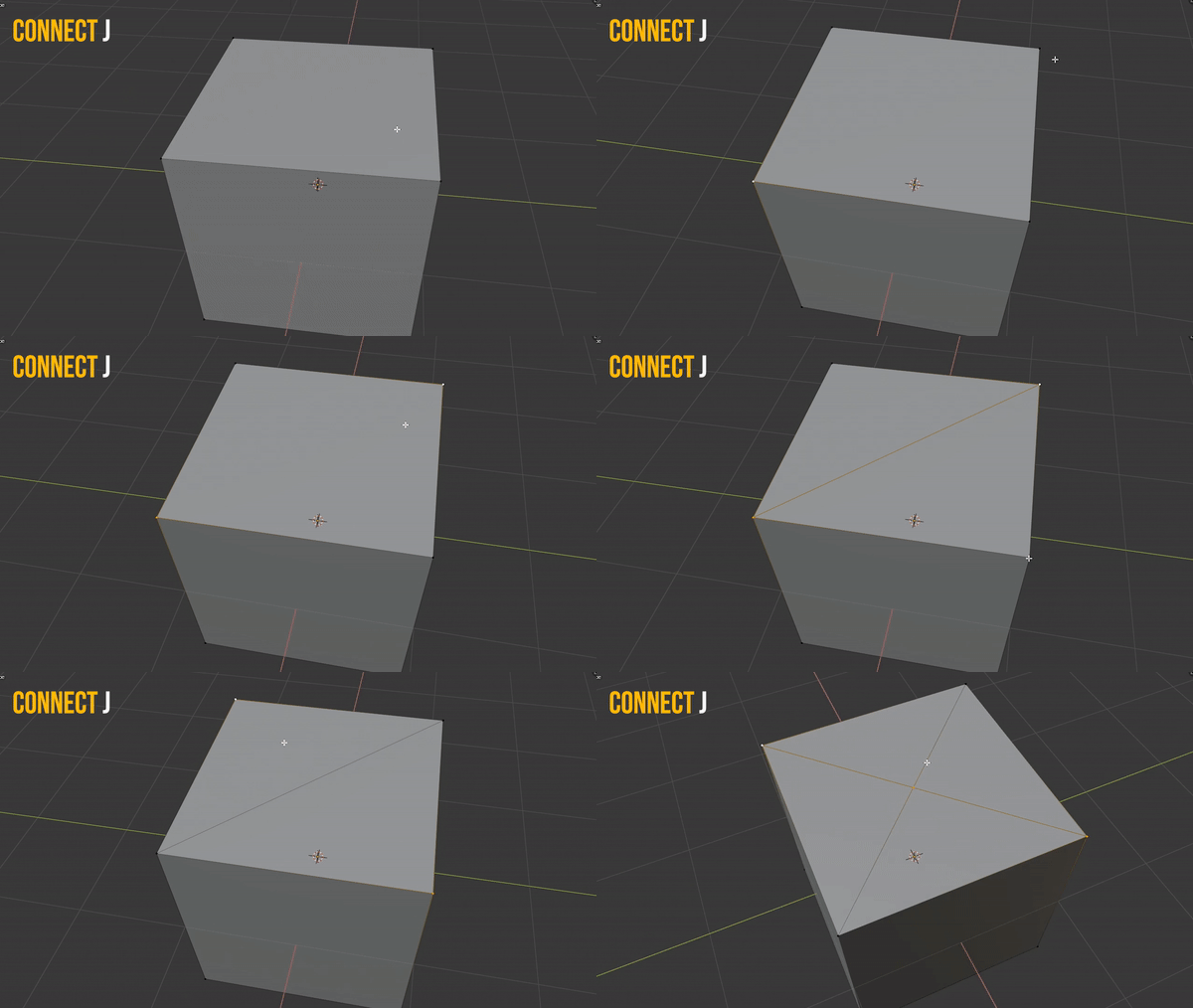
Fill
Similar to Connect, y'all tin can likewise make full in faces. Select the vertex points you lot want to connect with a confront, then press F. Yous tin create an due north-gon, triangle or quad with this method and y'all can also utilise this to create an border betwixt ii vertices.

Subdivide and Smooth Shading
These can be establish under the same Right-Click Menu but are context-specific.
If you are in Object Mode, right clicking will reveal smooth shading, which will smooth out the mesh and remove the faceted look. This is typically something you'd enable after applying some subdivisions to the mesh. This is similar to adding a subdivision surface modifier with elementary enabled. Subdividing quickly adds in more geometry and evenly distributes this new geometry throughout your mesh.
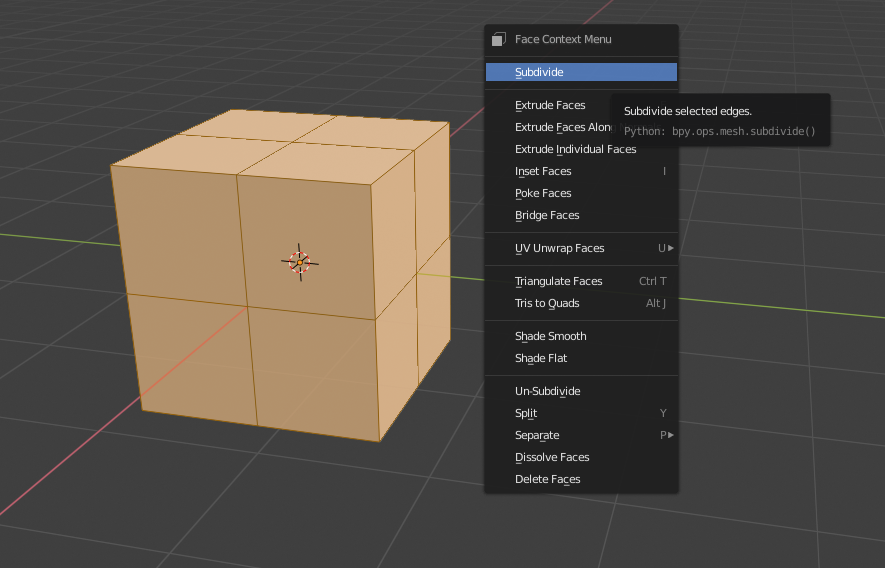 Right click to Subdivide in edit mode
 Right click to shade shine in object fashion
These are just a handful of the virtually common tools. Existence familiar with how these are accessed and when to use them volition amend your topology workflow.
2. Know When to use N-gons, Triangles, and Quads
N-gons are polygons that contain 5 or more sides. For case, a pentagon is considered an N-gon. Because of their odd shape Northward-gons can exist hard to subdivide and you may run across odd shading artifacts. This becomes an even bigger event when animating an object; if you try to bend a face in half you'll become unexpected results.
But N-gons are not always going to be avoided, and so you might too get familiar with them.
 Top face of a cylinder is an N-gon
Jonathan Lampel,CG Cookie'southward Blender trainer, says:
Due north-gons are good for complex, flat shapes that won't be animated or accept subdiv. It's pretty niche, but that's where they can beat out quads because they're faster to work with. Simply be careful to convert them to tris or quads before UV unwrapping.
Triangles aka iii connected vertices are the simplest way to create a face. Because of their simplicity, you'll discover that games utilize meshes as triangles. If you imported a model made entirely of Quads into Unity, you lot'll see it gets converted into triangles. Triangles introduce poles for just about every vertex. (Poles are 3, 5 or more than edges connected to a vertex and these produce their own problems which we'll discuss subsequently.)
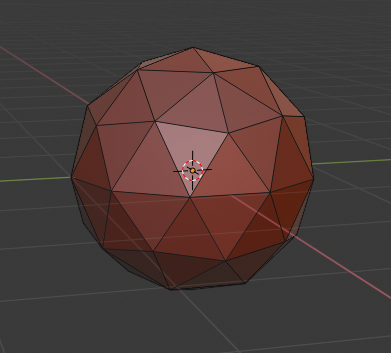 Icosphere is made entirely of Triangles
Lastly, we have Quads. Quads have 4 edges and 4 vertices making information technology like shooting fish in a barrel to subdivide. This also makes them great for things similar sculpting or utilizing them inside a game engine which will eventually convert these quads into triangles.
Along with using quads, ensure that these are properly scaled. Elongated faces will result in stretched textures and tin deform your mesh topology. Quads not only make for make clean topology - they also help display the proper shape and "flow" of your mesh.
 UV Sphere is made mostly of Quads
iii. Empathize Edge Catamenia
Nosotros talked about N-gons before along with triangles and these could introduce something known equally a Pole. Every bit I mentioned in a higher place, Poles exist when we have a vertex with 3, v or more edges continued to it.
Why is this important? Considering poles essentially command the direction of your topology. Understanding how to command the "period" of your topology is vital to getting specific details in place. Moving and placing poles down to command the flow yourself is highly dependent on the model you're working on.
If you're interested in learning more about how to control poles and edge menstruation, I'd highly recommend watching this lesson on Edge Loops in Blender by Jonathan Lampel from his Mesh Modeling Bootcamp.
In that form, Jonathan also discusses All Quad Junctionswhich includes this graphic to amend understand how poles could touch on your topology:
 Credit to Don Newman
iv. Use MatCaps
MatCap (short for Textile Capture ) is a complete material that allows for proper lighting and reflections. MatCaps assistance us come across how light and reflections react to your mesh topology. It'south a very like shooting fish in a barrel and quick way to determine if your mesh is distorted due to bad topology.
Beneath, we have a scene with traditional shading. While nosotros practice have some lighting and shadows, it may be hard to encounter distortions in something similar a reflection. Instead of creating a cogitating material and shader in Blender we tin can quickly change the viewport shading to using a MatCap.

I've applied a MatCap that includes a very glossy and reflective surface. Now I tin can quickly tell if whatsoever distortion appears within the polish curved surfaces of this object.

To add a MatCap you'll need to access the viewport shading menu:
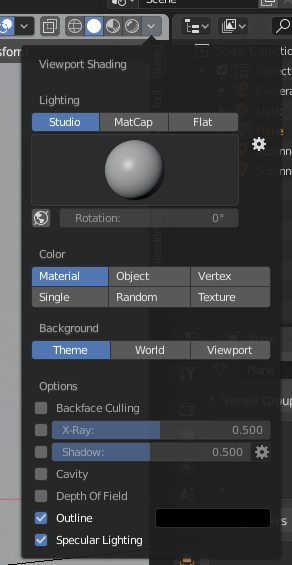
Ensure you lot have Solid as the display method (the solid white circumvolve) and when yous open up this up y'all should immediately see an option to switch between Studio, MatCap and Flat for the lighting. With MatCap selected I can also change out the type by clicking on the preview of the material:

"
5. When to employ Creases versus Belongings Edges
"
In that location will come up a fourth dimension when y'all add together a subdivision surface modifier to a mesh with apartment surface and y'all'll see those edges start to droop or lose their crisp edge.
There are a few ways y'all can keep the smoothness of the modifier while however keeping those edges crisp. The get-go method: using a crease.
Creasesare practical directly to an edge and you lot can brand these sharp past increasing their crease value, sometimes also known as their weight (which is a value between 0 and 1). Select the edge in edit fashion, then use the keyboard shortcut CTRL + Due east (same every bit the edge card) then motility your mouse in or out to adjust the crease weight.
As you may take guessed, creases tin only be practical to specific edges. If you lot have a very smooth mesh but want specific parts of information technology extra abrupt (such every bit the body lines on a vehicle), using creases might exist but the affair you need. Here'southward an example of a basic cube with a subdivision modifier applied and the height 4 edges accept Edge Crease enabled with a value of i.

Property edges are typically recommend due to the amount of influence you can accept on the mesh in general.
Like to a tent, the more support poles yous provide, the more than distinct the shape volition be. Holding edges, also known every bit back up loops, permit you to create extra geometry effectually edges to ensure they don't droop. More than geometry in one area leaves less room to "alloy" betwixt edges. The downside to this is that added geometry can cause problems with the rest of the mesh topology.
Take a look at a similar example, a cube with a subdivision modifier - just this time, we have holding edges supporting each corner:

Here is another example of both, but with the cube on the left containing nothing but creases. This means less geometry which may be useful if you're actually tight on how much geometry you lot tin include in a scene or object but has it'due south downsides as yous can see:

6. Proceed It Simple, Stupid (Buss)
This is largely dependent on your mesh, merely often you can break it upwards to ensure that detailed pieces don't brand the rest of your mesh denser than it needs to exist.
Think about a motorcar door handle. The machine door itself tin can be relatively uncomplicated geometry-wise, but a door handle has a key hole, handle and frame around that handle.
The handle will be more intricate. Merely why should the entire door provide supporting loops and geometry for a smaller slice? It makes sense to create the auto door and the handle separately. You can get as detailed as you want with the door handle, while the door keeps it's low polygon count.
Along with that, decide the blank minimum of edge loops needed to form the shape you're looking for. It may exist tempting to add in a ton of loops early on to brand something look better, but the more than geometry you add, the harder it becomes to work with. Limit your loops early on to create what is needed, then add more where necessary.
seven. Beware of Duplicates
When you beginning using tools like Inset and Extrude you may forget to movement the added geometry which leaves duplicates in the exact same place. Depending on what was duplicated it may be difficult to actually run across the changes made, but will become credible when y'all effort to manipulate the mesh in those areas. Take a look at the image beneath: tin you spot the indistinguishable vertices?

Here, I extruded the top face by pressing E just then hitting enter. Sometimes you lot may accidentally striking enter or think you cancelled the operation when all you really did was leave information technology in place. I can select the top face up and move it upwards:

If you lot suspect you may accept duplicate vertices, you can select the entire mesh and apply shortcut central Alt + Gto pull upwards the Mergemenu. Y'all'll be provided options to merge vertices (assuming you have more than ane selected) based off the centre indicate, 3d cursor, or to collapse them into 1. The final choice is By Distancewhich was previously known as "doubles". If vertices are close enough, they will be merged together.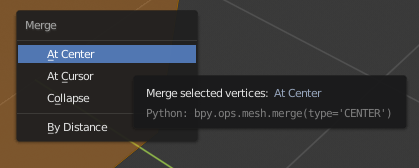
eight. Always Check Your Normals
Like to duplicate geometry, you may detect that your mesh appears darker than normal.
Get-go off - what is a normal?
Normals refer to the direction of the faces. Here you can meet blue lines indicating the direction each confront is pointing in:
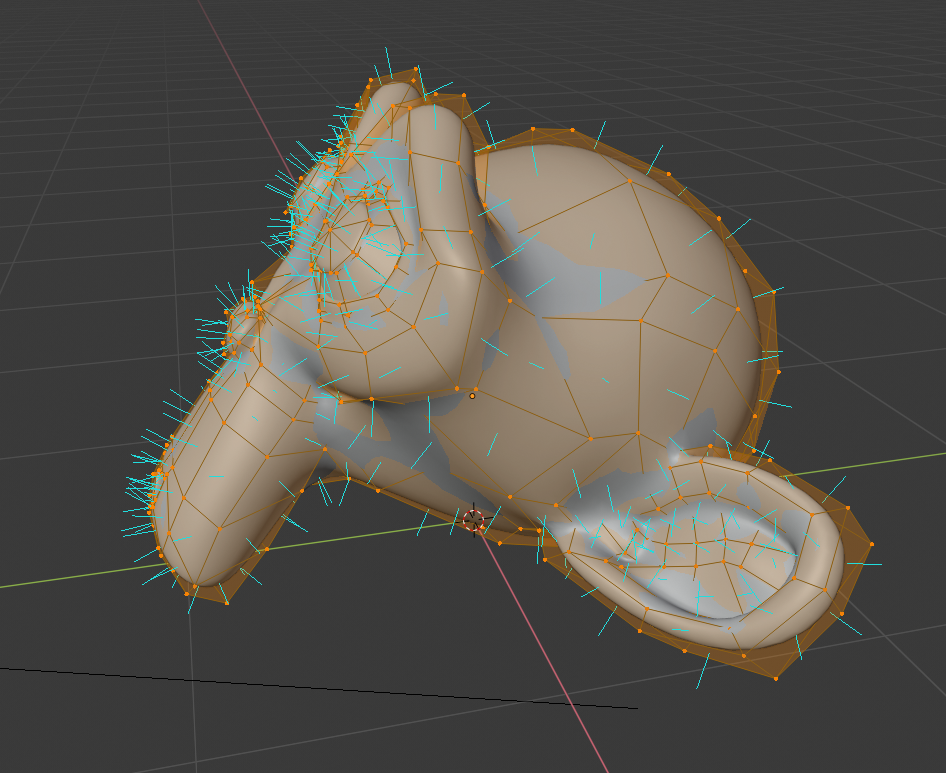 If you want to enable this yourself you can find this setting under overlays at the bottom where it says Normals. Y'all can select Vertex, Split or Confront normals forth with a size for the length of the blueish line:

From time to time you may be working on a mesh and finish upward in a state of affairs where your normals are flipped in the opposite direction. While this mostly affects the rendering of your object, it may confuse you into trying to prepare the issue past adding more edge loops or modifying the mesh.
Below is an instance of a couple faces of our mesh flipped. The faces withal exist just because they're pointing in the opposite direction they issue in weird shading. In rare instances yous may also accept problems creating edge loops through these areas. By enabling the normals display y'all can see which faces have issues.
In general, flipping normals is done all at once. To open the normals carte du jour use shortcut Alt+North. Next, you can recalculate outside to have the normals pointing outward.

In rare cases, y'all may be edifice a model where the inside is rendered in which example you'd want to recalculate the inside. This is likewise of import when working with games. You may consign a model and notice that mesh looks transparent and only the inner portions are rendered:

This is due to the normals existence flipped. Typically you lot only render 1 side of a mesh as at that place's no point in rendering parts of a mesh you won't actually see (which likewise helps with operation). If you experience this when importing into a game engine you'd have to recalculate the normals to the exterior in Blender and reimport that in one case again. Make certain to cheque out my article on Maximizing Your Unity Game Performance likewise.
Retopology Tools
Once y'all get to a bespeak where you are working with college density mesh models on a regular basis you will want to speed up your retopology workflow.
Retopology is the process of turning dense topology into simpler, lower poly topology. This is particularly useful when working with game avails or animations, where sculpted objects volition exist too costly to use or provide improper deformations.
RetopoFlow
RetopoFlow is retopology suite created in house by Jonathan Williamson and Jonathan Denning and can exist found on the Blender Market place. Yous can lookout man a costless form on how to use RetopoFlow addon - prepare to have your mind blown!
DynRemesh/AutoFlow

DynRemesh two.5 is a quad-based remesher for Blender 2.8, assisting in retopology for your dyntopo sculpts & 3dscans containing too many triangles.
Tesselator
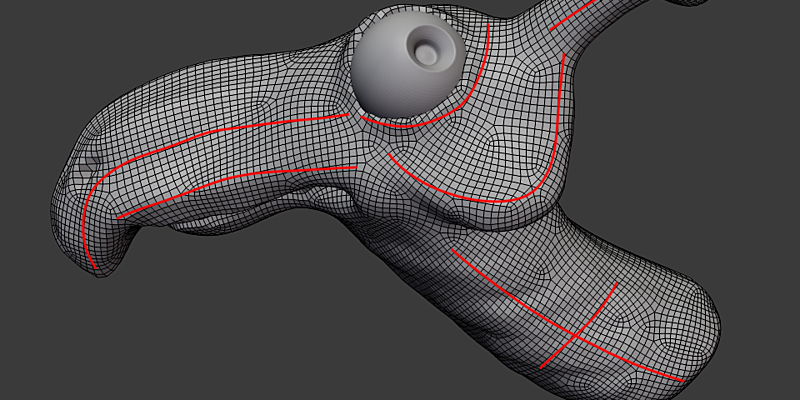
Tesselator is a remeshing addon that helps you create regular quad and triangle meshes easily out of sculpts.
Where to go Next
For more in-depth tips on proper topology and tools within Blender, check out some of our most popular tutorial series:
Recommended: Mesh Modeling in Blender
Learning modeling in Blender? This course will have you through mesh modeling workflows and useful tools. Included is a mini-projection for practise, plus a modeling exercise. Watch the trailer.
- Modeling with Good Topology (Alive Stream) by Jonathan Lampel
- Mesh Modeling Bootcamp (tutorial series)by Jonathan Lampel
- Introduction to Retopology (tutorial serial)by Jonathan Willamson
Those are just a few of the courses we offer that can speed up your topology piece of work flow. Have questions about your specific model? Experience free to post questions and comments on our customs forum.
Have any great topology tips and tricks y'all'd like to share? Permit us know down in the comments!
Source: https://cgcookie.com/articles/guide-to-clean-topology
Belum ada Komentar untuk "cleaning and smoothing 3d printer draw sliders"
Posting Komentar